HOME ABOUT
Annasi in Balummahara
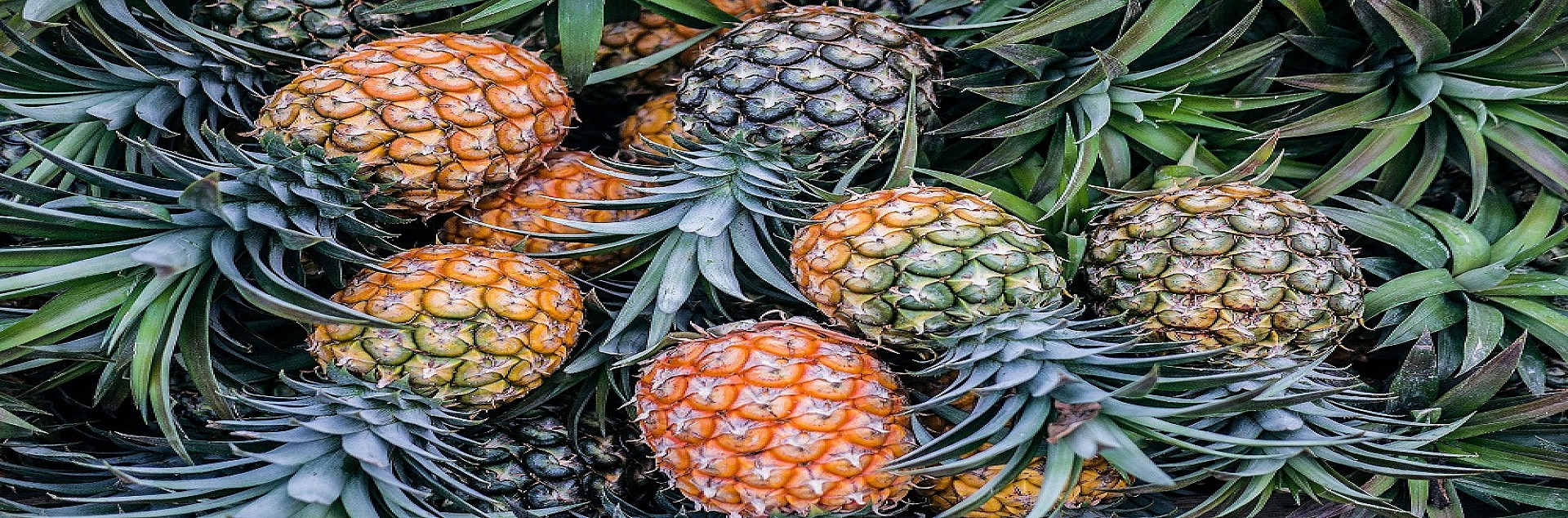
Pineapples are known to be the universal sign of hospitality. So it’s no surprise that despite it being a non-native to Sri Lanka, the delicious fruit has quickly taken over the island’s cuisine and has left a significant impact on the country’s aesthetics. First introduced during the European colonization in the early 1500’s, pineapples or ‘annasi’ for the locals has inspired many artistic floral motifs during the Kotte and Kandyan periods and has become a delightful addition to the Sri Lankan recipes.
The sweet cone shaped fruit is being traditionally cultivated in Sri Lanka for over six centuries for both domestic consumption and as a minor export crop. Today the plantation is a livelihood for over four hundred families in the Gampaha district, and the many street stalls with vendors bargaining and selling the fruits along the Kandy road is a welcoming sight and makes for a worthy stop to enjoy a snack of ripe annasi cubes flavored with salt and pepper or chilli.
Among all the towns recognized for pineapple cultivation, Imbulgoda, Balummahara and Mudungoda areas along the Kandy road is the most popular for the pineapple trade. With the surrounding air heavy with the pleasant fruity fragrance, Belummahara and its plantations have caught the attention of many tourists that pause to purchase from the locals and support their cause. If you’re visiting, other attractions surrounding the area include the Henarathgoda Botanical Garden and Pilikattuwa Raja Maha Viharaya.
Written By: Kavisha Perera